AR
Monday, April 18, 2011

Wednesday, April 6, 2011
walking project-period 2
 Today we continued our walking experiment by walking to a location and finding the distance. We have to find out how many steps are taken in 10 seconds. We recorded each persons step and added them and multiplied by 6 and divides by 4. Our formula we need to follow was- EE was our walker and she walked an average of 27.5 steps in 10 seconds. We found out that she took 135 steps in one minute. We divided it by 60 and got 2.25 steps per second. We later realized how we messes up our experiment and had to start over. This time, we took the measuring tape and measured 50 feet. She walked the distance of that, which also failed. Mr. Finley explained to us to find the uncertainty of our steps. That is something we will continue tomorrow. Tomorrow we will also review the numbers that we found today and use uncertainty to receive a better answer for the number of steps S.D
Tuesday, April 5, 2011
Walking Lab
Our group started the walking lab yesterday. We started by looking at the equation Distance/ Time = Speed. Then after understood that we devised an experiment.The first step in our experiment we measured a distance of 49 feet 6 inches and that would be the distance we walked. Next we got a timer and we timed each person in our group walking the distance distance three times each. Then we used our equation Distance/Time = Speed for each of our times. My times were 10 seconds, 9.4 seconds, and 9.7 seconds. Then I divided 49.5 feet by each of those times and I got 4.95 ft per sec, 5.27 ft per sec, and 5.1 ft per sec. Next I found my average time which was 5.11 ft per sec. We did this for everyone in the group. After we did that Finley had us measure from his room's door to Mr. G's door which was 198.25 ft. Next we predicted how long it would take KK to walk that distance. Her average speed was 6.24 feet per second. So that means we had the distance and the time for our equation. Next we took the distance with uncertintey and divided it by the speed with its uncertintey. The range we got was 31.74 seconds- 31.79 seconds. Next we had KK walk the distance so we could see the actual time. Her two times were 30.92 seconds and 29.86 seconds. Then we need averaged those out with the uncertinty and we got the range of 30.395 seconds- 30.385 seconds. So even though our prediction was close it still wasn't right on. REMEMEBER TEST ON FRIDAY -DB
Sunday, April 3, 2011
March 31 #4

Today we had a substitute and he handed out Lunar Lab packets for us to do. We used a lunar simulation to answer the questions in the packet. Most of the questions were about the phases of the moon and how an observer on Earth would see the moon. We had to work in pairs to work on the packet but we didn't have to finish it. The substitute said we would have time to work on it the next day.
-CS
April 1st

Today, we spent the whole class finishing our Lunar Lab that we started the other day.
Once we finished all four pages of the Lab, we checked our answers with each other. Since everyone is progressing at different rates, some people might have finished checking the labs and started other things (I am not really aware of what other people are doing because I just finished checking the lab at the end of class with my group.)
AT 4th blog
Tuesday, March 22, 2011
March 22nd, 2011 - Seasons and Sunlight
Today in class, the first thing that we did in class was discuss why we have seasons. We hypothesized that seasons occur because of the Earth tilting different directions and the Earth's position in orbit. Later we learned that the Earth's tilt is always in the same direction and is
constant. The Earth's tilt is always 23.6 degrees if you draw a line from each of the poles.
Next, we discussed direct and indirect sunlight. We already know that the Earth's position around the sun changes making the Earth point either away or towards the sun. The hemisphere tilted towards the sunlight will receive direct sunlight, and the other will receive indirect sunlight. The amount of direct sunlight on the Earth was displayed in
our simulation we did yesterday in the bottom chart with the yellow dot being either spread or focused.

Next, Mr. F had us do an experiment to prove this. Mr. F has a device that measured the amount of solar energy in a room. Then Brady climbed on top of desk and took a solar energy source (a light) and shone it over the device. As Mr. Finley slowly moved the device upwards, the solar energy decreased 0.1. This proves that direct and indirect sunlight is true.
Therefore, seasons occur because of the position the Earth is around the sun. When the Northern hemisphere is receiving indirect sunlight, it is winter while it is summer in the Southern hemisphere. When the Northern hemisphere is receiving direct sunlight, it is summer while it is winter in the Southern hemisphere.
- J. L. (4th blog)
Monday, March 14, 2011
3/14 Phet Simulation
Tomorrow there will be a quiz so today is a review.
SD pushed MM on a cart towards the wall and he only moved a few feet and slowly. The harder she pushes, the further MM goes and the faster he gets there. The greater the force the faster the acceleration. The more mass of the object the slower the acceleration. The less smooth the surface the greater the friction, the slower the acceleration. And finally, unbalanced force accelerates while a balanced force goes at a constant rate. Today we'll test all these hypothesises by using Phet.
We tested it by having a little man push a box across a friction-less surface (ice). The harder he pushed, the faster and further the box went. This proves our hypothesis.
Then, the man pushed the box and the refrigerator both with 900 N on ice. The box was moving traveled across the screen in about 3 seconds while it took the refrigerator 5 seconds. This proves our hypothesis that greater masses slow down the acceleration.
The man pushed the box much faster on a friction-less surface (ice) versus wood and the box accelerated faster. We made sure the box was moving at a constant rate of 500 N. This proves our hypothesis.
We will test by pushing a box across the friction-less ice to see if we push it once, how much it accelerates. If there is a balanced force of 0 mph, the box goes at a constant rate. This was proved by us not pushing/touching the box.

This is a picture of the little man pushing the box on a wodden surface with unbalanced forces of 777 N.
JF (4th blog)
Saturday, March 12, 2011
Hi everyone!
Today is March 11, 2011
The first thing we did today was go over the homework.
We added in arrows to the dot diagram in between the dot because we realized that regular dot diagrams are way too primitive. The arrows show direction, and speed (the longer it is, the faster it goes)
Today is March 11, 2011
The first thing we did today was go over the homework.
We added in arrows to the dot diagram in between the dot because we realized that regular dot diagrams are way too primitive. The arrows show direction, and speed (the longer it is, the faster it goes)
Here is a description of the dot diagrams
A) The dots get further apart as they go up. The arrows point up
B) The arrows get closer together as they go up. The arrows are pointing up.
C) There is just one dot
D) The dots get further apart as they go down. The arrows point down
E) The arrows get closer together as they go down. The arrows point down.
The second, third, and fifth one we had questions about
In B:
The ball leaves your hand moving rather fast, but it slows down. This is made very clear by the ball stopping and hovering at the top of its ascent .
In C:There is only one dot in the diagram because at the top of its path, the ball stops and hovers for a very short time. This means it is not moving, and therefore there is only one dot.
The ball leaves your hand moving rather fast, but it slows down. This is made very clear by the ball stopping and hovering at the top of its ascent .
In C:There is only one dot in the diagram because at the top of its path, the ball stops and hovers for a very short time. This means it is not moving, and therefore there is only one dot.
In E:There was also a question about E. We wondered why, if you stop it when you catch it, it says it is still going down. Mr. Finley showed us an example. When he caught the object, his arms went down to compensate for the mass of it.
Here is a video showing what would happen in this experiment. It will help explain the things discussed
Here is a video showing what would happen in this experiment. It will help explain the things discussed
above.
http://paer.rutgers.edu/pt3/movies/throw.mov
Then Mr.Finley showed us an example. He pushed a dictionary across the table. The book left his hand, then moved across the table, slowied down, and finally stopped
Then we made a force diagram, and explain why this happens.
My group said that Mr. Finley exerted a horizontal force, but once it left his hand,
Then Mr.Finley showed us an example. He pushed a dictionary across the table. The book left his hand, then moved across the table, slowied down, and finally stopped
Then we made a force diagram, and explain why this happens.
My group said that Mr. Finley exerted a horizontal force, but once it left his hand,
only the Earth and the table was pulling on it. Then we went over it.
Another group said friction was doing force.
Another idea was that there was unbalanced force being exerted by the surface of the table. In other words, it was pushing back. DB asked if the table could push up and back. We determined that it can. The surface of the table was pushing back, and the whole table was pushing up. This is the solution we went with.
ADVICE:Remember that friction is just like heat. It is NOT a physical object. Juts like you cant add heat, friction can't do force. Only tangible objects can exert force on a system. This is very important to remember, and can be a little bit confusing.
MK(Fourth Post)
Monday, March 7, 2011
March 7th, 2011
Today when we walked into class, we got right to the questions from Friday. We took out our homework from the 3rd, and JF and AL drew the force diagrams on the boards from the picture frame and the car problems.
AL had labeled her force diagram like this (on the top) force exerted from the Earth on Car, then the dot was labeled car, and on the bottom it was the force exerted from the road to on the car. But she had mixed the two up, the force from the Earth was on the bottom, and the road on the top, so JP fixed them.
JF had labeled hers as so; on the top, it was the force from the string and the middle was the picture with the frame and the bottom was the force on the earth
The arrows on the picture frame was very short because the picture frame isn't exerting as much force as the car.
Then Finley showed us a "video" on PHET that was a man pushing a box on the ice and we had to make a force diagram on the "video"
EC and I said that if force is exerted on the box, then the box is going to continue traveling for awhile, but before the earth's force is going to slow the box down.
JG (Fourth Time)
AL had labeled her force diagram like this (on the top) force exerted from the Earth on Car, then the dot was labeled car, and on the bottom it was the force exerted from the road to on the car. But she had mixed the two up, the force from the Earth was on the bottom, and the road on the top, so JP fixed them.
JF had labeled hers as so; on the top, it was the force from the string and the middle was the picture with the frame and the bottom was the force on the earth
The arrows on the picture frame was very short because the picture frame isn't exerting as much force as the car.
Then Finley showed us a "video" on PHET that was a man pushing a box on the ice and we had to make a force diagram on the "video"
EC and I said that if force is exerted on the box, then the box is going to continue traveling for awhile, but before the earth's force is going to slow the box down.
JG (Fourth Time)
Thursday, March 3, 2011
3/3/2011 Period 2
The main thing we did today was go over the HW, but there were a lot of very important questions that came up. Our HW had 2 questions that each had a, b, and c.
Question 1 had a scenario about a jacket on a hook.
A said: what are the objects with which the jacket interacts? What object is our system?
When we discussed this in class we came up with the jacket touching the hook, and that the jacket was the point of interest and the system.
B said: Represent the situation with a force diagram.
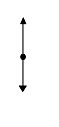
The force diagram looked a little like this. The hook was pushing the jacket up, and the earth was pulling the jacket down. The arrows have to be equal because if the hook exerted more force than the earth the jacket would keep rising, if the earth was exerting more force than it would pull the jacket down to the ground.

Hook
Hook
People
Question 1 had a scenario about a jacket on a hook.
A said: what are the objects with which the jacket interacts? What object is our system?
When we discussed this in class we came up with the jacket touching the hook, and that the jacket was the point of interest and the system.
B said: Represent the situation with a force diagram.
The force diagram looked a little like this. The hook was pushing the jacket up, and the earth was pulling the jacket down. The arrows have to be equal because if the hook exerted more force than the earth the jacket would keep rising, if the earth was exerting more force than it would pull the jacket down to the ground.


Hook
+70N
Jacket
0N
Earth
Earth
-70N
Alexia had a great comment about the hook, she thought that the hook wasn't exerting any force. That's when we had a class discussion and found out that if the hook wasn't exerting any force than the jacket would just fall because there is nothing holding it up..
C said: How would the force diagram change if you put a heavy book in your pocket.
If you put a book in your pocket than the diagram would look more like this. The earth would be exerting more force downward and the hook would be exerting more force upward. The jacket would still be in the s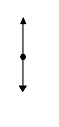 ame spot because the forces are still equal.
C said: How would the force diagram change if you put a heavy book in your pocket.
If you put a book in your pocket than the diagram would look more like this. The earth would be exerting more force downward and the hook would be exerting more force upward. The jacket would still be in the s
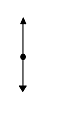 ame spot because the forces are still equal.
Hook
+100N
Jacket
0N
0N
Earth
-100N
Question 2 was about 2 people carrying a suitcase.
You had to make a # sentence and a force diagram for A. The # sentence i used was +20 + -20 = 0, and this was my force diagram.
Question 2 was about 2 people carrying a suitcase.
You had to make a # sentence and a force diagram for A. The # sentence i used was +20 + -20 = 0, and this was my force diagram.

People
+20
Suitcase
0N
Earth
-20N
For B you needed to put the total force exerted on the suitcase. That would be again O because 20+(-20) is 0.
C asked how you decided which side you decided was to be positive and which negative. The positive side goes up because the positive side is always represented by going up or right and the negative side is always represented by left or down.
We didn't do anything else in class to today, but we do have 4 Q's for HW.
JB Post #3
C asked how you decided which side you decided was to be positive and which negative. The positive side goes up because the positive side is always represented by going up or right and the negative side is always represented by left or down.
We didn't do anything else in class to today, but we do have 4 Q's for HW.
JB Post #3
Wednesday, March 2, 2011
New Unit - Astronomy
Today we are starting a new unit - Astronomy
We started off class with a demonstration of holding a bowling ball in one hand and a ping pong ball in the other. Then we observed what happened.
Force - Interaction between 2 or more objects. (push, pull, etc.)
Next, we talked about what the previous class had said about this demonstration.
"The student had to have done work to the ball in order to hold it up." This is not true because you are applying force to the ball, not work. The ball has gravitational potential energy when it's being held, but nothing is doing work to it.

There is an equal amount of force on both sides so it is balanced.
Our number statement for this scenario would be: +7 + -7 = 0

We started off class with a demonstration of holding a bowling ball in one hand and a ping pong ball in the other. Then we observed what happened.
- You have to push up to hold each ball
- There is a different push on both sides because of the weight difference
We then discussed a new term, force, and that you are applying force to the ball to hold it.
Force - Interaction between 2 or more objects. (push, pull, etc.)
Next, we talked about what the previous class had said about this demonstration.
"The student had to have done work to the ball in order to hold it up." This is not true because you are applying force to the ball, not work. The ball has gravitational potential energy when it's being held, but nothing is doing work to it.
QuEsTiOnS
+What would happen is this was the only force exerting the bowling ball?-The only force is pushing up, so it would keep going up and not come down
+Are there any other objects exerting a force?
-The earth is pushing the ball down.

There is an equal amount of force on both sides so it is balanced.
Our number statement for this scenario would be: +7 + -7 = 0
This is because you are giving the ball energy when you hold it above the ground. The earth is pushing down on the ball, making it lose its energy.
During class today, someone mentioned something about the displacement of the ball. I didn't really understand that and why it was displacement. Could anyone tell me about it?
EE (3rd blog)
Thursday, February 17, 2011
February 17, 2011 #3

Today in class, we reviewed atoms and subatomic particles again.
We reviewed that:
- atoms are made of smaller particles.
- those particles are called subatomic particles.
- there are three different types of subatomic particles: protons, neutrons, and electrons
These were the questions that we needed to answer:
+ What do these particles do? (charges)
The protons and electrons determine the charge of the atom. If there are more protons than electrons in an atom, the charge is positive. If there are more electrons than protons, the charge is negative. If there is the same amount of protons and electrons, the charge is neutral.
+What controls an element's identity?
The number of protons determine the element's identity.
+What controls the atomic mass of an atom?
The mass of the protons and neutrons determine the atomic mass of the atoms.
+What is an Ion? An Isotope?
An ion is a negatively or positively charged atom. An isotope is an atom with an irregular number of neutrons.
+What does all of the numbers and letters refer to in each periodic table box?
The number in the top left corner of the box is the atomic mass of the atom. The number in the bottom left corner is the number of protons in the atom. The letter in the middle of the box determines what element the atom is going to be. The number in the top right corner of the box whether atom is positively charged or negatively charged and how many particles make it positive or negative.
We used the simulation and previous notes to answer these questions, but I am still confused what makes an atom stable or unstable.
-CS
Wednesday, February 16, 2011
February 16, 2011

Today, we started class today by continuing working on this question:
In small groups, you will devise a plan on how to separate the following frozen mixture of sawdust, iron fillings, sand, and sugar.
Ever group discussed with there tables about how they are going to separate these.
Our group said that we would melt the ice cube in a glass container. The less dense material (wood) will be floating and we will scoop it out. Then we will use a magnet to attract the iron filling out of the water. Then we will pour the water, sand, and sugar mixture through a coffee filter and into a glass container so the sand and water/sugar is separated. After that, we will heat the water/sugar mixture. We predict that by doing this, the water will evaporate and the sugar would stay in the glass container.
After we came up our own experiments, we performed it. This experiment has to be done within the class period.
When performing our experiment, we were very careful when heating the water with dissolved sugar. Another group heated the water/sugar for too much and had the same outcomes as our sugar lab. I am not really sure about how to prevent this. Is there a certain temperature that sugar separates to carbon and water?
-AT 3rd Blog
Tuesday, February 15, 2011
Friday 18, 2011
Sorry but this blog is really late, this is supposed to be from Friday...
Today we came in and the first thing we did was to get goggles and an apron. We were going to start our experiment for our lab report.
So the first thing we did was to make sure we had everything. The materials we used were...
- Gauge
- Test Tube
- Test Tube Grabber
- 15-20ml of Sugar
- Saucer
- Saucer 2
- Matches
- Bunsin Burner
Before we did anything, as a class, we talked about the background information we got for our lab which was the homework from the night before. Some the the information was about John Dulton, atoms, particle motions, conservation of mass, decomposition, synthesis, states of matter, and sugar(C12H22O11).
Our experiment was to decompose 20ml of sugar. Our first step was to weigh all of the items that i listed above.
Our hypothesis was that sugar is made up of 2 things. Water and Carbon because sugar is C12H22O11. The C part is carbon and the H20 part is water. So our prediction was that if we were to evaporate the water by boiling the sugar, there should only be carbon left in the test tube. Also if conservation of mass were true, the test tube with sugar in it should weigh less than before the water was boiled out of it.
We were ready to experiment. First thing we did was to turn on the Bunsin Burner. We took a match and we put the flame over the bunsin burner, and it was on fire. Then we took the test tube with sugar in it, and used the test tube grabber to put it over the fire. In about a minute we already saw changes happening. At the bottom of the tube that was being heated the most, it seemed like the sugar was turning into a liquid. Moments later, the liquid turned into a yellow-ish color. The level of the sugar started rising to the top of the test tube as water was evaporating. It turned purple like black and there was water particles escaping and we trapped it with the saucer. As more water particles came, it turned back into water and dripped down. After we felt like there was no more water left, we turned off the bunsin burner and put the carbon filled test tube away.
Later in the day, we came back to see how the carbon was like. It was still black and hardened. We took paper towels, wrapped the test tube, and smashed it. The carbon came out looking like this.

That was it with our experiment, but now we have a whole lab report to write about this. We need background information, hypothesis, prediction, materials, experiment, analysis, and a conclusion. The lab report will be due sometime around next week. The test will be on Friday.
Y.E
First, we went over our homework. We learned that a physical change is when an object changes, but does not effect their chemical nature. An example of this is wood turning into a baseball bat. The next thing we went over is a chemical change which is when substances change into different substances. An example of this is burnind wood. Most of the time, chemical changes relate to rearangment of atoms. One more thing is that physical changes are reversable and chemical changes aren't. After that, we start to think about an experiment. We have to filter an ice cub to see all the materials in it. The materials are iorn, wood shavings, sugar, water, and sand(I'm not 100 percent sure on sand).For this specific experiment, my group decided to make an experiment we did in the 5th grade. We will put the cube in a transparent cup, and leave it alone for a while. After waiting for a day we should see the most dense materials on the bottom and the least dense materials on the top. We can just take each part out from top to bottom and we will have all the materials in seperate spaces. We also have our test on friday. Mr.Finley posted a study guide on the website and I highly recomend you check it out. Our lab report is also due friday.
PS I can't add an image because the "add picture" button was not working for my computer. If I were to add a picture, I would have shown a burning fire, and a glass with the least density on the top and the most dense on the bottom
MP
PS I can't add an image because the "add picture" button was not working for my computer. If I were to add a picture, I would have shown a burning fire, and a glass with the least density on the top and the most dense on the bottom
MP
First in class, we went over our homework. The definition of a physical change is when an object changes but does not affect their chemical nature. Some examples of this is when wood becomes a baseball bat or melting ice. The definition of a chemical change is when substances change into different substances. An example of this are burning wood. We learned that typically, chemical changes relate to rearrangement of atoms. Another thing about physical and chemical changes is that physical changes are reversable, while chemical changes aren't. We also have a test on friday, so start studying. Mr. Finley posted a study guide on the website to help us and I highly recommend you check it out. After we went over homework, we discussed and experiment. We had to filter out an ice cube to see the materials inside. The materials are iorn, wood chips, sugar, water, and sand(im not 100 percent on sand). My group had the idea that if we put the materials in a cup, the less dense materials will go to the top, and the more dense will go to the bottom. Then, we can just take the materials out. Lastly, our lab reports are due on friday. So, I hope this will keep you up to date.
Thursday, February 10, 2011
Thursday February 10th
We continued discussion of the topic from the end of class yesterday. About how the number of atoms of each type must equal out on each side of the equation.
For example: H2+O2 yields H2O had to be changed to 2H2+O2 yields 2H2O
The three methods we learned to solve these types of problems are using pictures, writing the numbers of each element, and using ratios. The first two are the easiest methods to use.
I cannot create the picture method here but ill show the other ones.
H2+O2 yields H2o 1.to start write the number of each type of atom for each side
H=2 H=2 2. you can see that there is a different number of oxygens on
O=2 O=1 each side. To correct this you need to add more molecules.
H2+O2 yields 2H2O 3. Now the oxygens are equal but the hydrogens are different. To
H=2 H=4 correct this you need another Hydrogen molecule.
O=2 O=2
2H2+O2 yields 2H2O 4. This is you final answer.
A major part of this is that you cannot have fractions such as H1/2 because half of H would become a different element.
All of this has to do with conservation of mass. There must be and equal number of each type on each side otherwise something has gone wrong. Imagine you have just finished chocolate chip cookies. You put them in the oven and when you come back later the chocolate chips are gone. You absolutely know that you put the chocolate chips in the cookies so you start to freak out because this is impossible.
That is basically what we are dealing with when we do these problems. The mass must stay the same. Nothing can just vanish.
Tomorrow we are starting to work with Bunsen burners. We will deal with the type of chemical reaction called decomposition.
-JP
Monday, February 7, 2011
Feb 7, 2011
We started by recreating the concept map on the smart board. We had to connect the terms particle, atom, molecule, ion, proton, nuetron, isotope, electron, and element. We gave the connections and answers and Fin drew it. He also talked about how the mass of an atom came from the protons and neutrons, but not the electrons. For extra credit: look up the mass of protons, neutrons, and electrons. Then compare them. He put a piece of paper in a box with two chimneys and let the paper smolder. He told us to figure out which chimney the smoke would go through. He did the same thing again but he put a lit candle underneath the other chimney and told us to figure out which chimney the smoke would go up now. The only hint he gave us was that the box was called a convection chamber. The candle heated up the air making it less dense and it rose up. The smoke rushed to the empty space and was heated up by the candle and it rose out Chimney A instead of Chimney B.
G Stum
Friday, February 4, 2011
Today in class we reviewed the homework," More Matter...it matters". We discussed what experiments could be performed to see if heat can be added or removed from a system. Someone said we should measure a closed container of water's weight and place it on a stove and see if the weight increased.

In class, we performed a similar experiment. We lit a blade of metal. The metal weighed 7.9 grams before we lit it. After it was lit, the weight remained the same. This disproved Elmar's idea of heat which was it can be added or removed from a object.
By doing this experiment, we learned:
*Heat isn't a physical, if it was metal would've gotten heavier.*
*Heat is a process,it's the movement of particles.*
We defined conduction by stating it was the transfer of energy by touching. (particle to particle)
We defined convection by stating that it was the transfer of energy through fluids(ex.water,air,play-doh, jello,etc.)
Fluids- are not state, it's a classified combination of liquid or gas.
Mr.Finley asked us why the goo in the lava lamp moves?
Our answer was that the goo was heated up by the energy source.(light).
The exact process on how a lava lamp really works is :
energy source shoots out light waves ~ waves hit particles, particles move faster ~ particles spread out ~ substance expands ~ substance is less dense(particles are spread out in it),so it floats ~ floats to the top ~ substance is further away from energy source ~ energy (particles) transferred to environment which means substance has less energy ~ particles are moving slower ~ particles condense,(denser) so sink to bottom ~ cycle starts again because goo is closer to the energy source (light) again
AR (3rd)
Thursday, February 3, 2011
Today we started with checking the home work. Then Mr. Finley went over what we did on Teusday. We went over how scientists said that when they rubbed their hands together they were leaking phlagastun (flag-a-stun). Then they called it heat. We went over how the scientists tried to find out how heat works. They came up with some crazy ideas like how they were swimming in a liquid of heat and other ideas. Then Fin started complaining about how people misuse the word "heat" in our language like how people ask each other to turn up the heat. Then he asked a lot of people to stand in a line and hold each other's hands. Then he explained how the people are particles in a spoon and Finley was the soup. Then, he explained how the particles moved around. Everyone in the line shook their arms to show movement. DB pointed out that the people model shows that energy travels in waves. Then we talked about energy waves and about solar flares. Then Fin asked what would a star's radiation affect? We said that it would shut down all sorts of technology like cell phones and satelites. Then we had a quick talk about pop-tarts, hotpockets and peeps and how they explode. Then we talked about the radiation of heat in a micrwave and how it's bad to watch things heat up in the microwave. Then he talked about how radiation affects the body by giving you sunburn. Then he talked about how we dropped aan atomic bomb in WWII that has radiatioin. Then Fin said that even though a bomb was dropped 100 miles from a house far they would still be affected because the radiation travels in waves and travels far. Then he showed us a simulation on PhEt and that if he increased the amount of waves, the faster the particles moved. Then he asked the groups to duscuss how the microwave worked on PhEt simulation. Then he asked the groups to discuss how a thermomiter works. We then quikly went over how it works. Then it was time to go.
WR
WR
Subscribe to:
Posts (Atom)